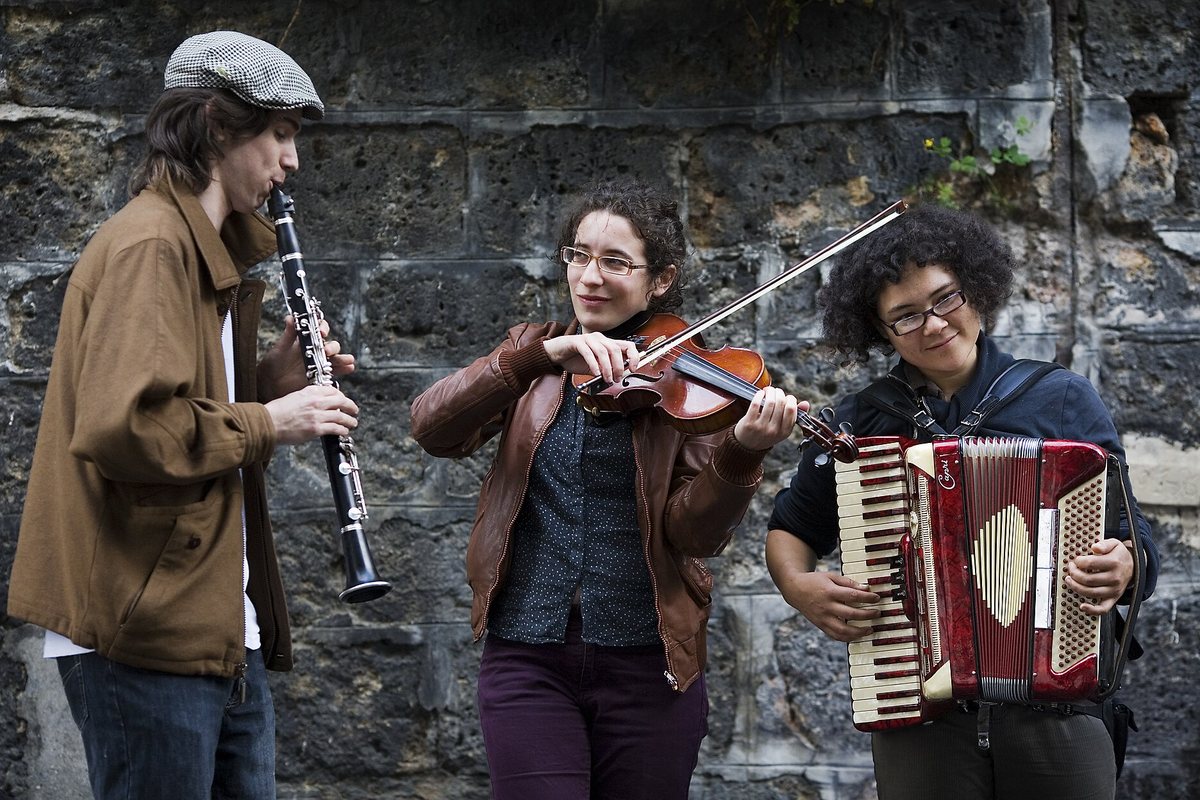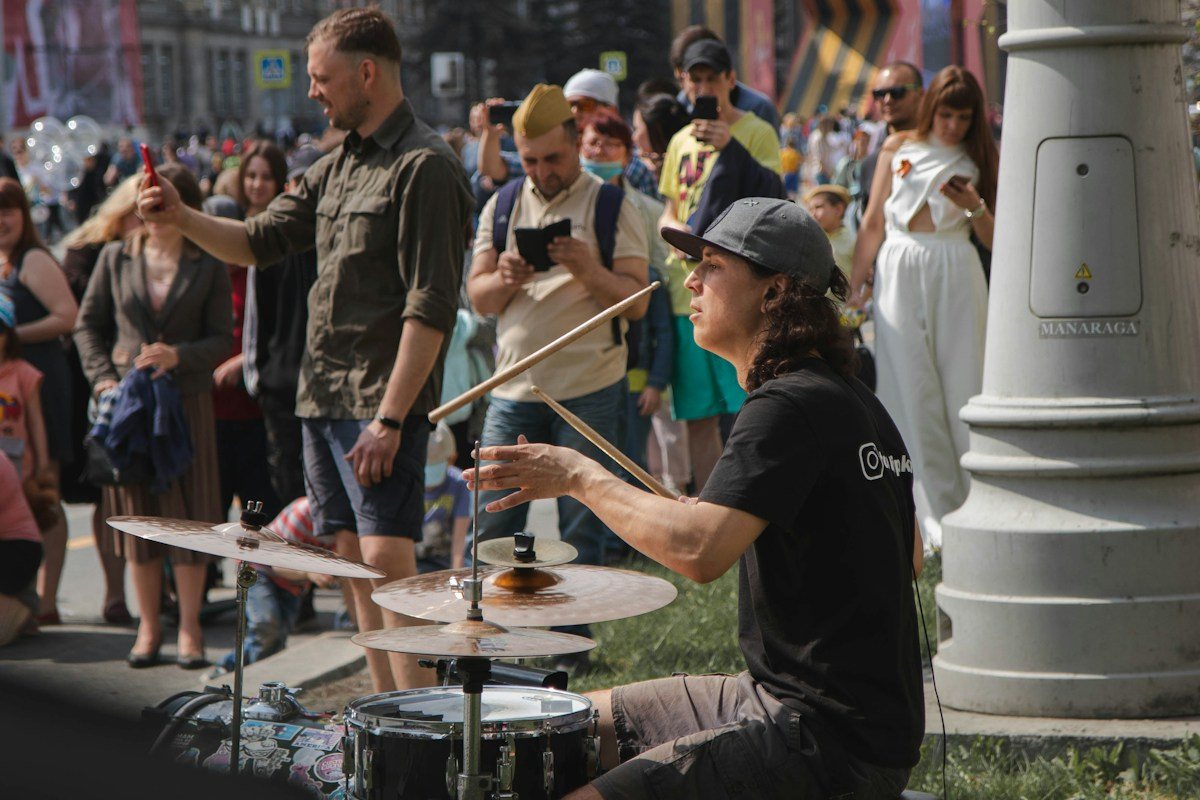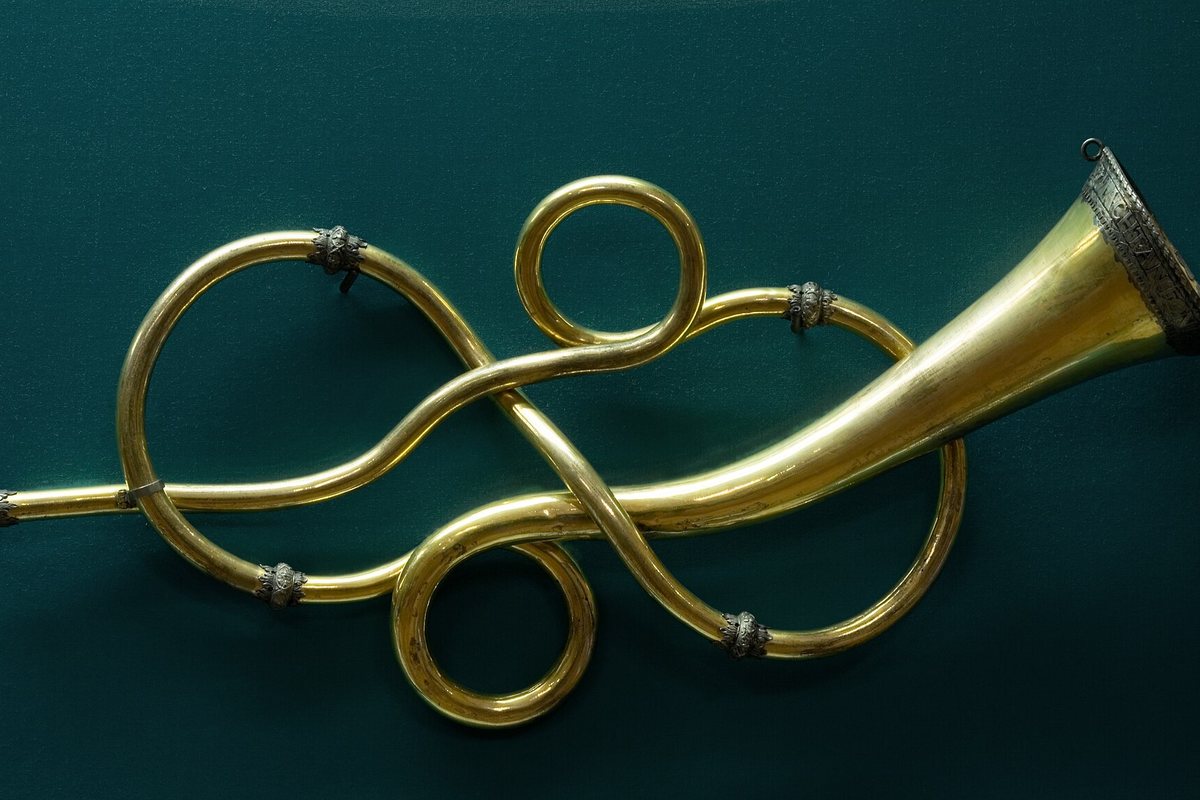
A trumpet can make the far side of a square feel close. Its first clear phrase may reach you before the player is visible. Then a bus pulls away, a delivery trolley rattles over paving, and the sound has to share your attention with the rest of the afternoon.
It is tempting to describe this as music overcoming noise. That makes a tidy story, but it misses the fact that the street belongs to many activities at once. People are working, talking, traveling, and trying to get home. Their sounds are not mistakes in somebody else's concert.
Listen instead for the performer's choices. A short phrase may fit into a gap. A sustained note may remain audible through a wash of traffic. A quieter passage may ask the people nearby to draw their attention inward rather than requiring the whole square to listen.
You can change the balance by moving a few steps, provided you leave a clear route for others. Beside a hard wall the instrument may seem more forceful; farther away, individual details soften and the melody becomes part of a larger scene. Neither position is the definitive way to hear the player.
When the song stops, pay attention once more. The square has not become silent. It has lost one participant. Remembering the traffic as well as the tune can make your memory of a place less polished and more particular.