Two musicians can play the same song without doing the same job. One holds a steady pattern while the other stretches a phrase; one fills a space, then leaves the next one alone. The pleasure is partly in the notes and partly in how responsibility changes hands.
Try following the quieter player for a verse. A supportive part can be easy to overlook precisely because it makes the whole thing feel natural. Notice the chord that arrives just in time, the bass note that gives a wandering melody somewhere to land, the decision to play less when a voice becomes more expressive.
Their communication may be almost invisible. A lifted shoulder can signal an ending. A look can suggest another chorus. Not every glance has a secret musical meaning, of course; sometimes somebody is checking whether their bag is still there. You needn't decode the partnership to enjoy its attention.
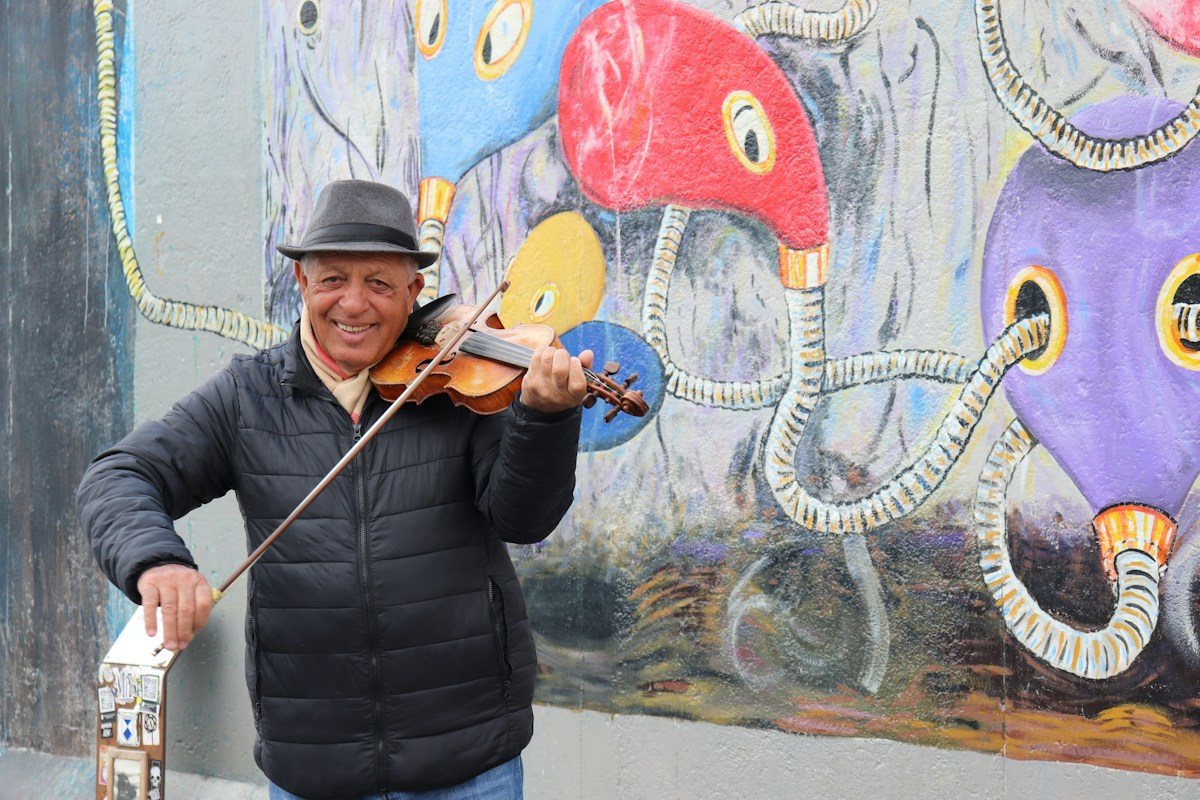
The street adds a third participant. A loud vehicle interrupts a delicate passage. Someone drops coins at an awkward moment. A singer waits half a beat longer before beginning again. The players decide, together, whether to hold their course or adjust.
A polished duet can sound inevitable. Watching one at close range reminds you that it isn't. It is a series of choices made by people who are listening to each other while you listen to them. That is worth remembering when you hear a full band later: a larger sound is still built from these small acts of cooperation.