Fela Kuti was born in Abeokuta in 1938, not Lagos. London studies and a band drawing on jazz and highlife belong to his early musical path. By the early 1970s, Afrobeat had become central to his work.
Lagos gave that work important settings, including the Afrika Shrine. The history of Kalakuta also includes military destruction. These are not simply colorful episodes around a catalogue; they form part of the relationship between music, public expression, and power in his life.
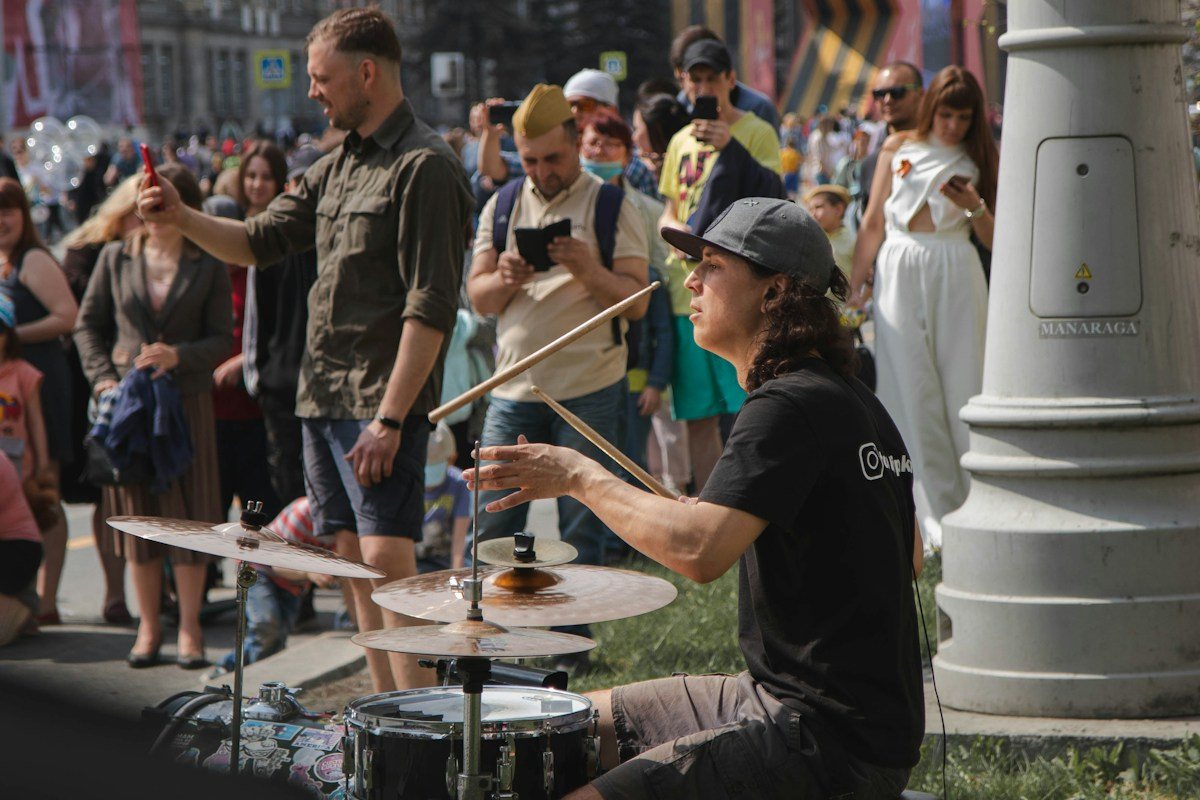
For a first close listen, allow time. Rather than waiting only for the singer, follow how the ensemble builds a repeated framework. Hear what changes within it: an entrance, a rhythmic accent, a line that shifts your attention from one part of the band to another.
Learn the context of the particular song from reliable sources. Political content deserves more precision than a general description of rebellious music. A recording can be forceful and still require careful interpretation of its words and circumstances.
Fela's Lagos story continues to be discussed through his music and through the work of his children. The city should remain a setting with real people and consequences, not a romantic shorthand for defiance. Listening closely to the ensemble is one way into that larger history; it is not the whole account.