A small child may begin dancing before the adults have decided whether to stop. There is no review process: a beat arrives, a knee bends, and the pavement briefly becomes a dance floor.
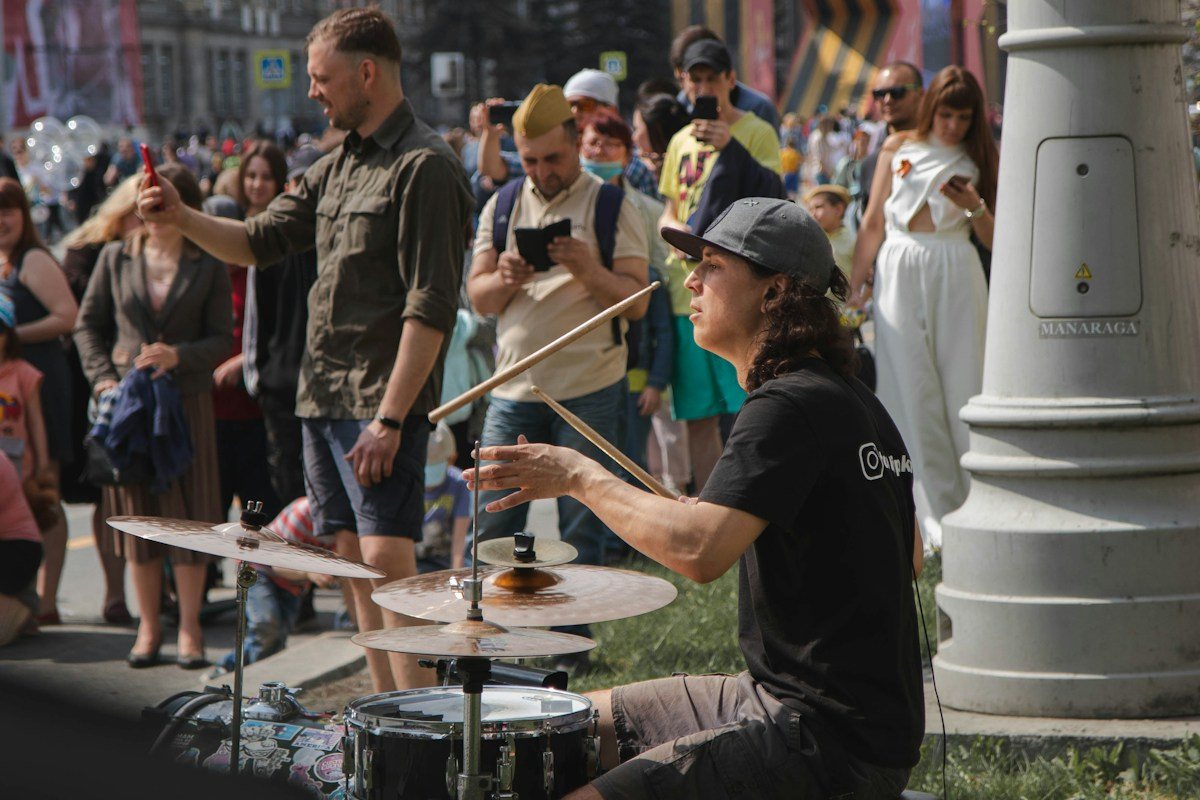
That direct response can loosen an audience. People smile at one another. A performer may acknowledge the movement, or may need to concentrate on the piece. Either is reasonable. A musician working in public has not automatically agreed to become a children's entertainer.
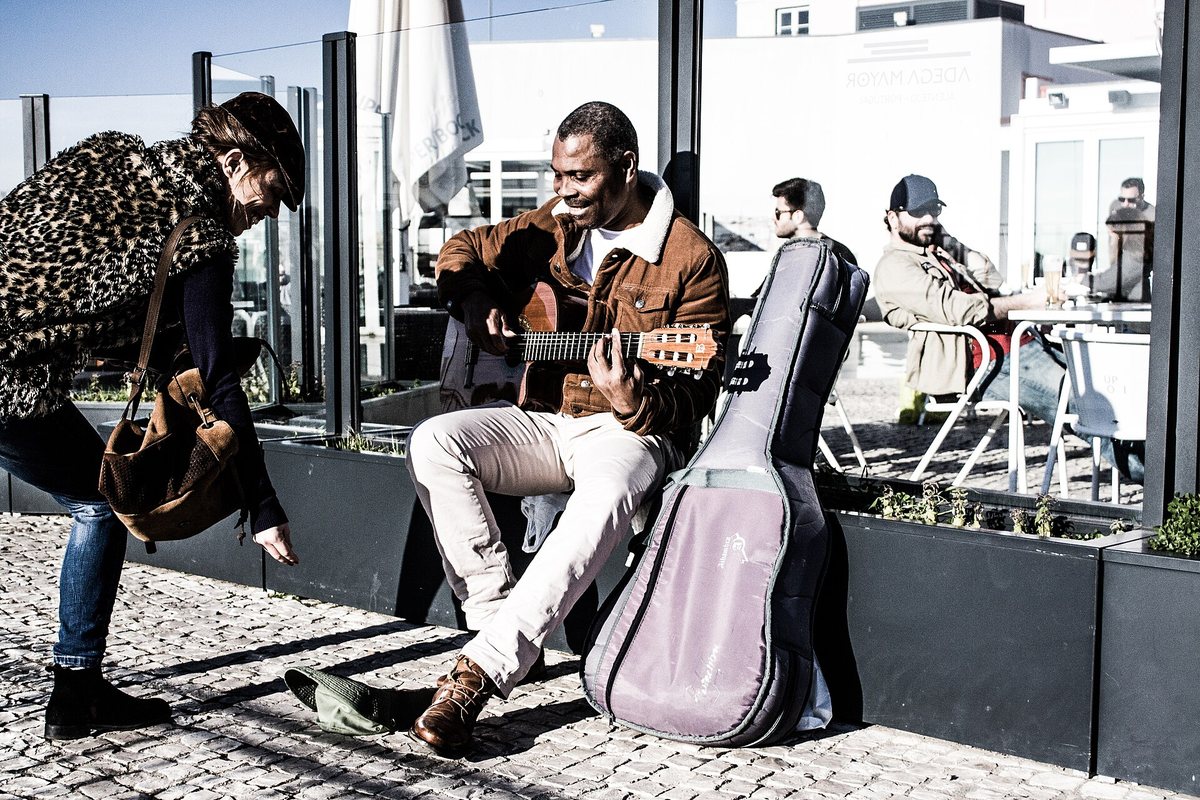
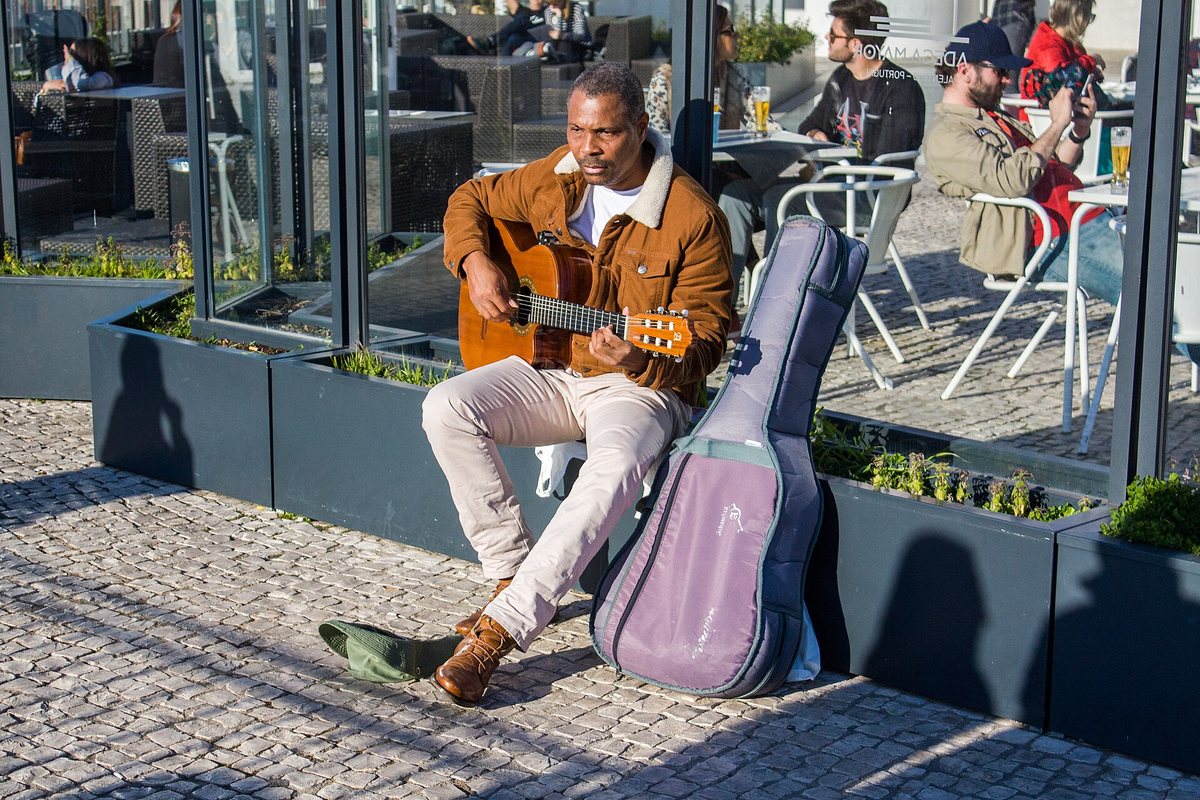
If you are listening with children, choose a place where they can see without entering the musician's space or blocking a route. Cases, cables, and instruments are interesting at close range; they are also somebody's equipment. A clear boundary lets curiosity remain welcome.
Talk afterward about what the child noticed. It may be the shiny valves, the player's red shoes, or a rhythm described as a horse walking. These are good beginnings. There is no need to replace them immediately with adult terminology.
You may hear the next song differently yourself. Children often attend to an element that experienced listeners have learned to ignore: the shake of a hand, the pause before a loud note, the visible effort of making a sound. For a few minutes, their attention can return a familiar instrument to the category of wonderful things.